PairDrop alternative: private code pairing with download approval
PairDrop is the actively maintained fork that carried Snapdrop forward, and its popularity is deserved: the same clean browser interface, steadier updates, and extras like permanently paired devices. Discovery still works like a shared room, though — on a shared network every device is visible to everyone on it, and permanent pairing keeps your devices discoverable through PairDrop's coordination service. Lan-Share takes the opposite trade. A short-lived 8-digit code pairs exactly two devices, nothing about you is listed publicly, and the receiver confirms each download before any bytes move.
Step by step
Open the page on the first computer
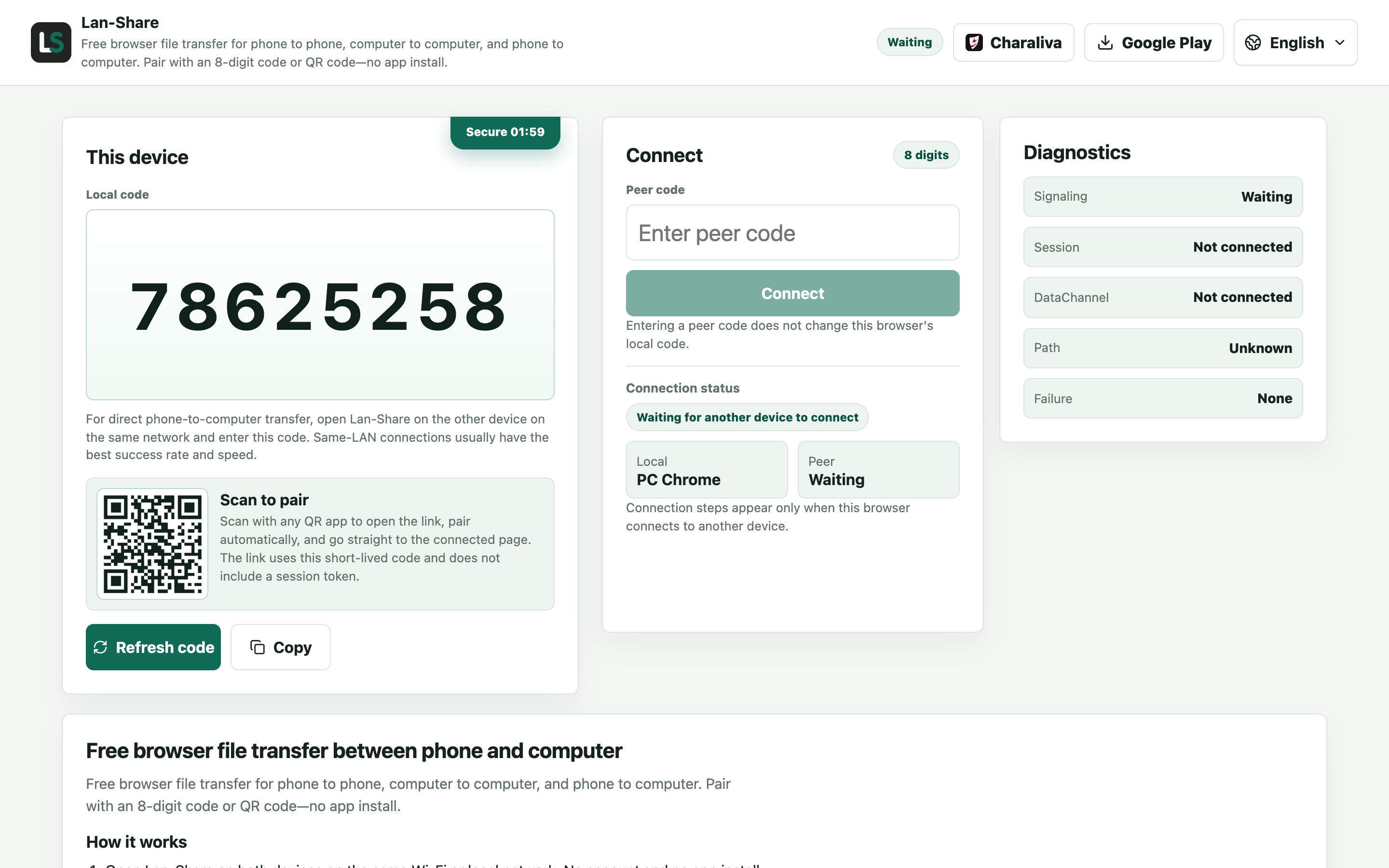
No public room exists here: the page shows an 8-digit code that is valid for two minutes and pairs exactly two devices.
Enter it on the second computer
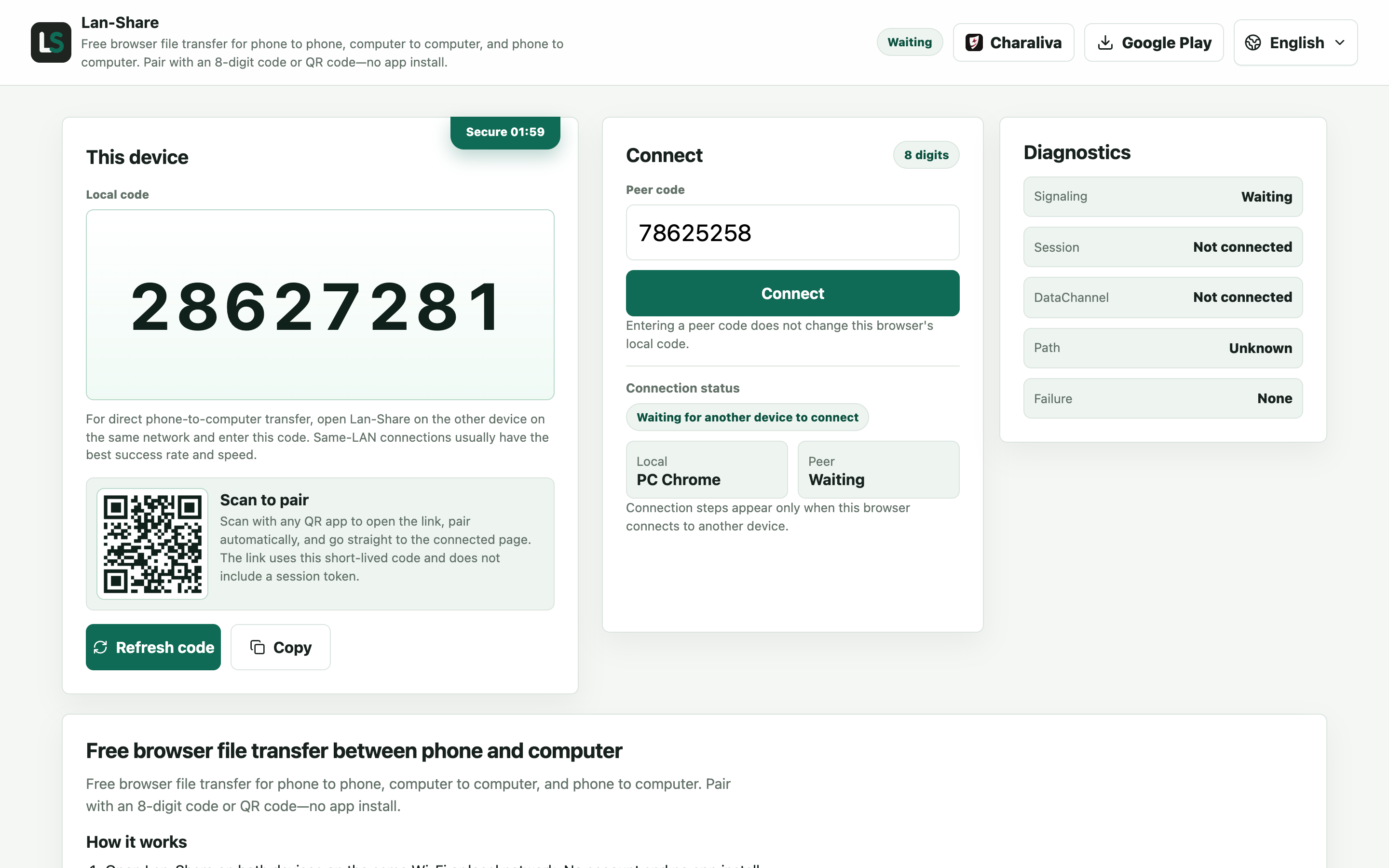
Type the code into Peer code or scan the QR code. A third browser using the same code is rejected, so nothing else can slip into the room.
Send from the first computer
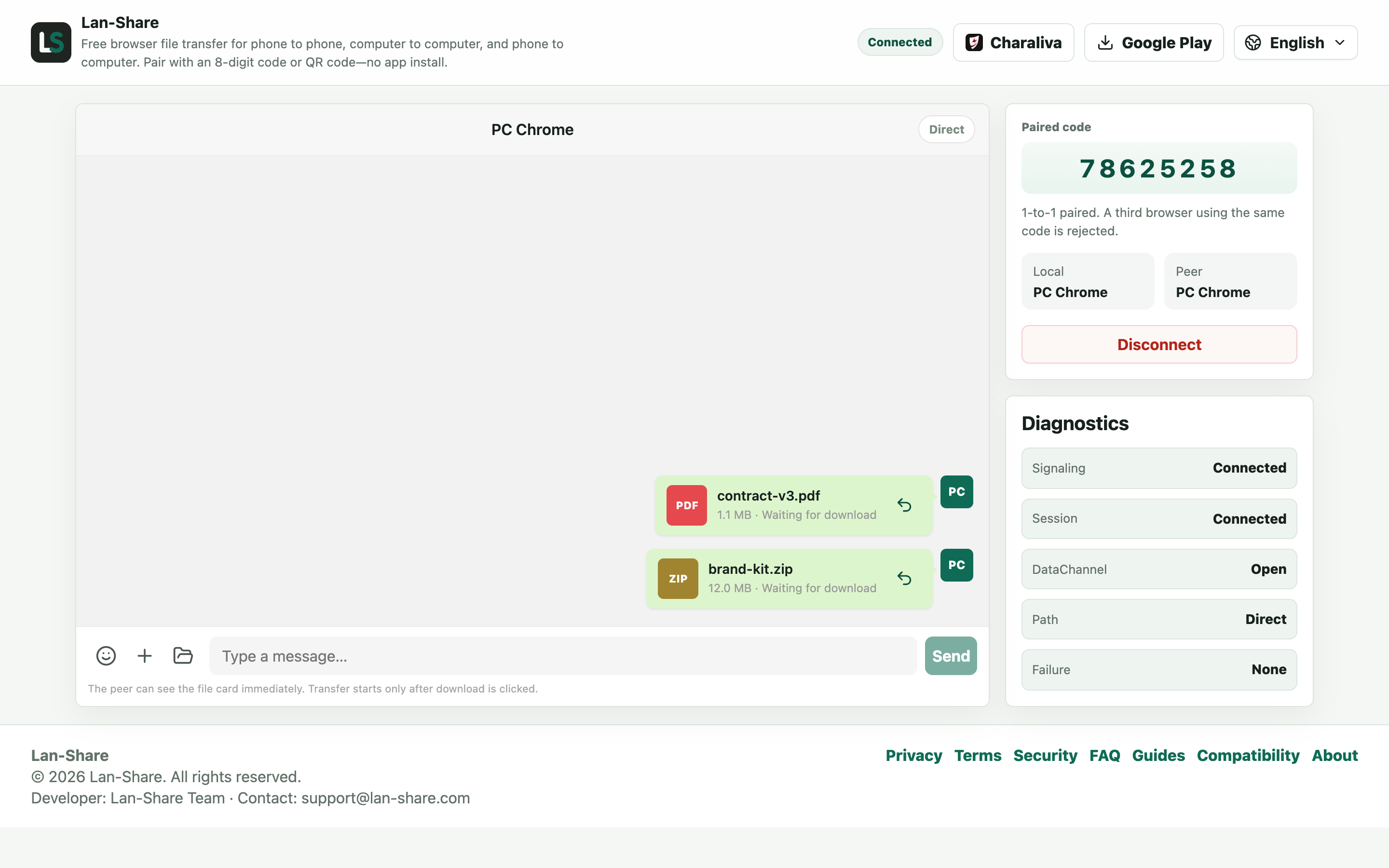
Drop files or a folder onto the conversation, or pick them with the paperclip. Each item becomes a card marked Waiting for download.
Download on the second computer
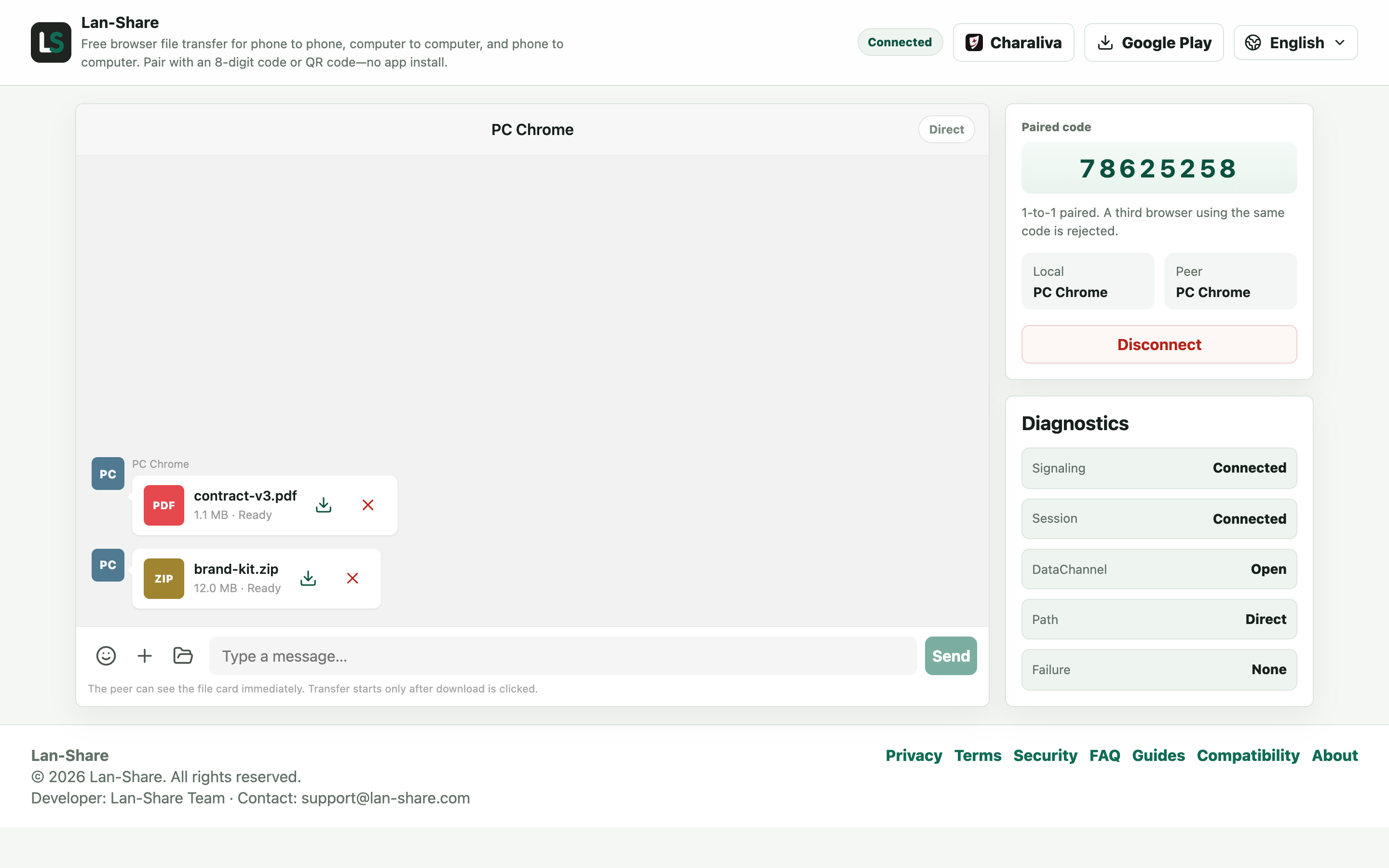
The cards turn Ready on the other side. Click the download icon and the browser saves the files under their original names.
The state of PairDrop
PairDrop is under steady development and is the natural home for Snapdrop fans. It runs in any browser, and beyond the shared room it can keep chosen devices paired across sessions, discovering each other through its internet coordination service even off the local network. File content still moves peer-to-peer. The trade is the one Snapdrop made: the room lists every device on the network, and the always-on pairing layer leaves a standing directory of your devices with an external service.
What Lan-Share does differently
Pairing is a short-lived 8-digit code or QR code exchanged between exactly two people, so there is no public room to sit in and no standing device directory. The receiver approves each download before the transfer starts. Content passes directly between the two browsers over the local network — never stored on a server. There is no account, no install, and when shared Wi-Fi is hostile the page keeps working over a phone's personal hotspot.
When PairDrop is still the right pick
On your own trusted network, moving files between your own devices, PairDrop is perfectly serviceable — permanent pairing is genuinely convenient for recurring transfers between gadgets you own. Pick Lan-Share for one-off transfers with other people, for shared Wi-Fi in dorms, offices, and cafés, and whenever you want the receiver to confirm every download — open lan-share.com on both devices and pair in seconds.
Troubleshooting
- The two devices never pair
Why it happens Guest Wi-Fi, VPN clients, and some routers isolate clients even on one network.
How to fix it Join the same main network on both, and turn the VPN off.
- The transfer stops when the screen locks
Why it happens Both iOS and Android suspend a backgrounded browser tab.
How to fix it Keep both pages in the foreground until the last file reads Downloaded.
- A file larger than the limit is refused
Why it happens The per-file limit is shown on the page, about 200 MB by default.
How to fix it Send it on its own in a fresh pairing after checking the stated limit.
- The received photo looks softer than the original
Why it happens Something in the chain re-encoded it — this route sends the stored bytes unchanged.
How to fix it Compare file sizes; if they match, the bytes are original.
FAQ
Is PairDrop safe to use?
PairDrop is actively maintained and moves file content peer-to-peer, which makes it a reasonable choice. The considerations are its shared-room discovery, which lists every device on the network to everyone, and permanent pairing, which keeps your devices registered with its coordination service. Lan-Share is built for the opposite preference: a private one-time code and per-download approval.
What is the best PairDrop alternative?
Lan-Share, when you want private 8-digit code pairing, a confirm-before-download step, and a tool under active development — no install, no account, works on phone hotspots. For the familiar everyone-in-a-room model, PairDrop itself remains a solid option.
PairDrop vs Lan-Share — what is the difference?
Discovery: PairDrop shows a shared device room and supports permanent pairing; Lan-Share pairs two devices with a short-lived code and keeps no device directory. Downloads: PairDrop receives automatically, Lan-Share asks the receiver to approve each file. Both run entirely in the browser and transfer content peer-to-peer.
Does Lan-Share work everywhere PairDrop does?
Both work in modern browsers on the same local network. Wi-Fi that isolates devices from each other — common in hotels and cafés — blocks both tools. Lan-Share also works over a phone's personal hotspot, a private network that is easy to fall back to.
Do I need an account for either tool?
No. Both are browser tools without registration: open the page, pair, and send.